



Uncovering the Evolution of Sambo: How Sambo Went from Military Training to Competitive Sport
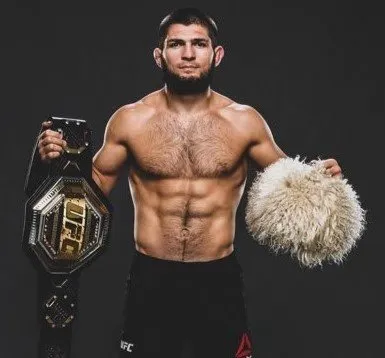
A military combat system focuses on tactical training, close-quarters combat, and defense techniques.
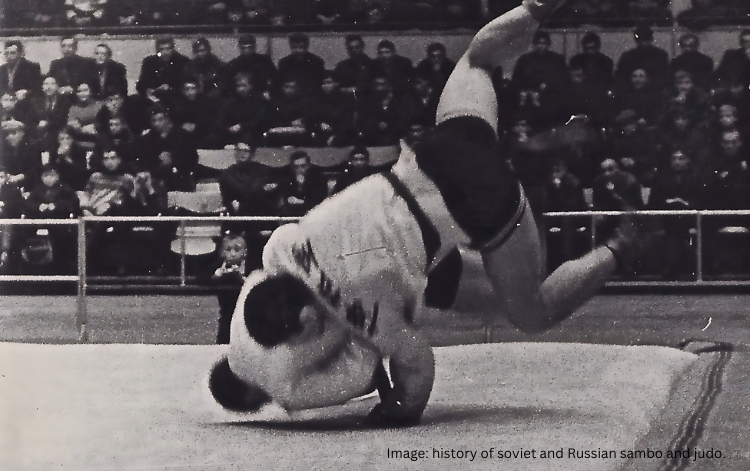
Sport Sambo has evolved from a self-defense system into a global competitive martial art and sport.
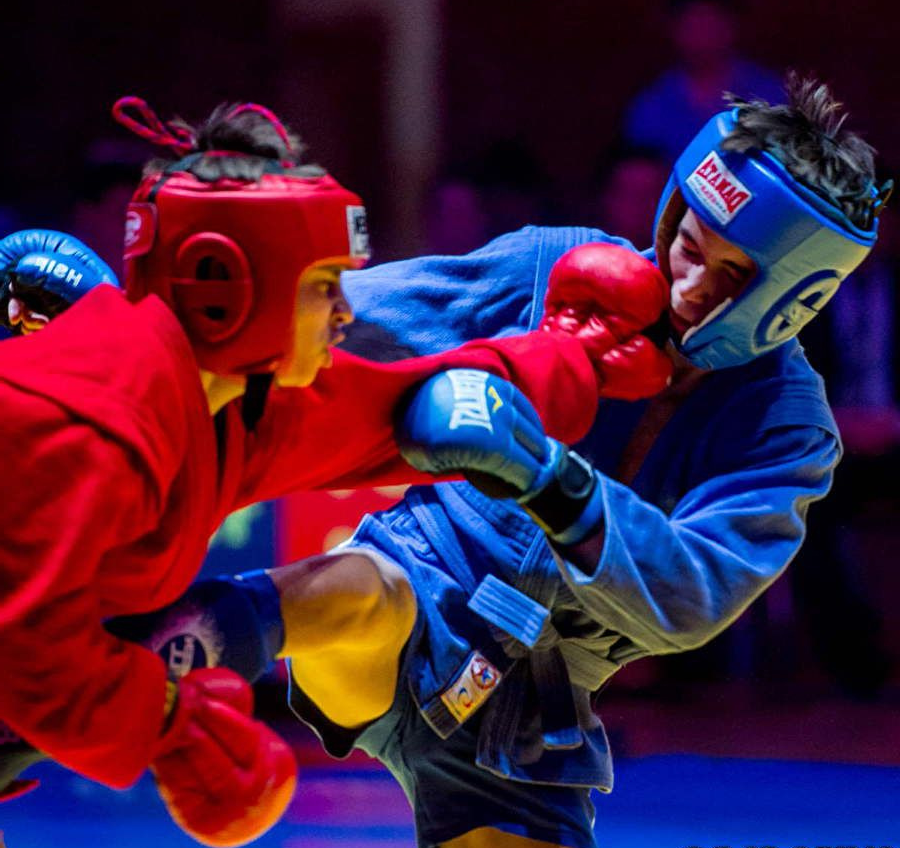
Sambo is a dynamic martial art and competitive sport combining judo, wrestling, and striking techniques.
Have you ever thought, how did a military fighting system become a worldwide sport? We have all been amazed by the explosive takedowns, quick leg locks and brutal ground and pound in MMA. But few know that its roots trace back to the Soviet-era martial art called Sambo.
It seems like a mystery that has attracted martial arts enthusiasts for years and many of us wondered about this outstanding long voyage. It is why we wanted to jump in a look deeply into its history.
Many of us have pondered Sambo’s remarkable journey. That’s why we decided to dive deep into its history. All the research that we have done, uncovered the fascinating evolution of Sambo. From the old school Red Army training camp to international competitions, we’ll take you through Sambo martial arts transformation.
We’ll discover how Sambo grew from its military background to become a officially recognized competitive sport in 1938 by the USSR All-Union Sports Committee. You’ll learn about key milestones and the different styles as we go. So get ready, grab your protein shake and get ready for a awesome martial history lesson about the evolution of Sambo.
Let’s get ready to rumble!
Russian Martial Arts
Sambo, a Russian martial art, is a great option for both fitness enthusiasts and self defense.
Origins of Sambo Training
Teaches real life self defense moves and competition skills, developed in the Soviet Union.
Combat Sport Training
Learn military style techniques that combine striking and grappling skills seamlessly.
Defining Sambo and Its Origins
Sambo is a unique combat system that was mixed together from many local and foreign fighting style that started as a military training program in Russia.
Etymology and Initial Concept
We’ve got a cool story to share about Sambo’s name and start. It comes from Russian words that mean “self-defense without weapons.” The Soviet Red Army came up with this idea in the early 1920s.
They wanted their soldiers to be tough in hand-to-hand fights.
SAMozashchita Bez Oruzhiya – that’s where Sambo gets its name.
The army needed a way to train fighters fast. They mixed parts from different fighting styles to make Sambo. It had throws from judo, strikes from boxing, and locks from wrestling.
This mix made Sambo unique and very useful for soldiers.
Integration into Russian Military Training
In 1918, Lenin set up Vsevobuch to train the Red Army in combat. This move laid the groundwork for sambo’s integration into Russian military training. We saw how Spiridonov and Oshchepkov stepped in to improve the system in 1923.
Their work led to a catalog of sambo techniques for soldiers. These methods blended Oshchepkov’s judo skills with local fighting styles.
The Red Army quickly adopted this new combat system. It was very useful for self defense and close-quarters combat. This type of training also provided quick reactions and mental toughness.
When Sambo took shape in the military, civilians also started to hear bout it. This allowed for Sambo to grow into different styles over time.
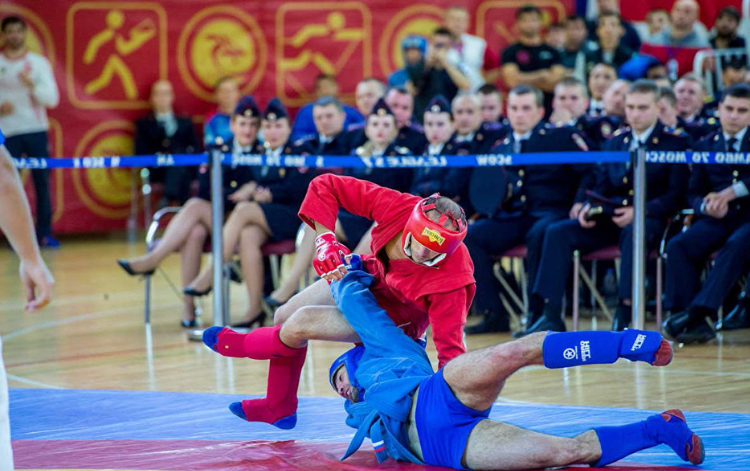
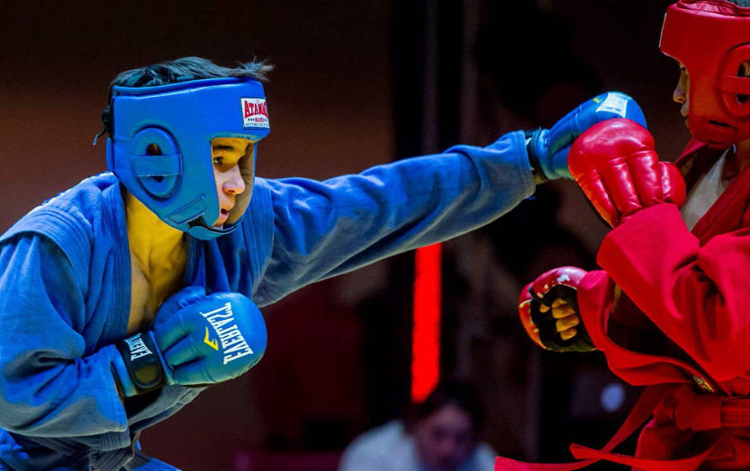
Evolution of Sambo Fighting Styles
Sambo has grown and evolved into many different styles over time. Each style has its own focus, from full contact to sports to self-defense. This is great for those that want to have options since no one has the same goals.
Sport Sambo
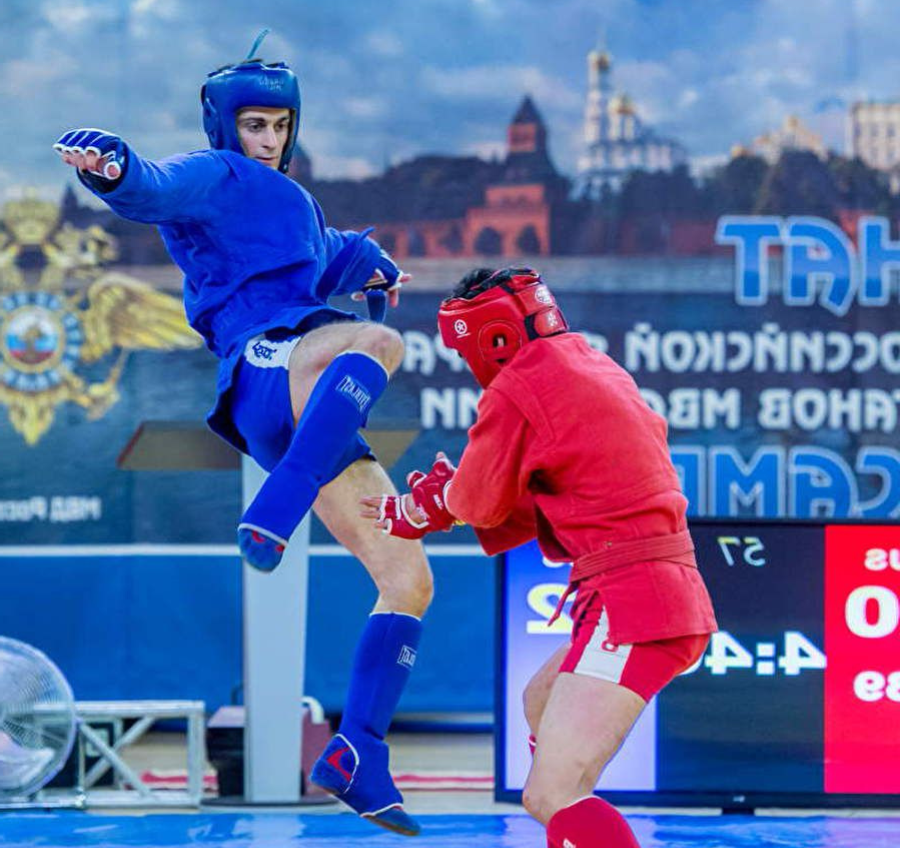
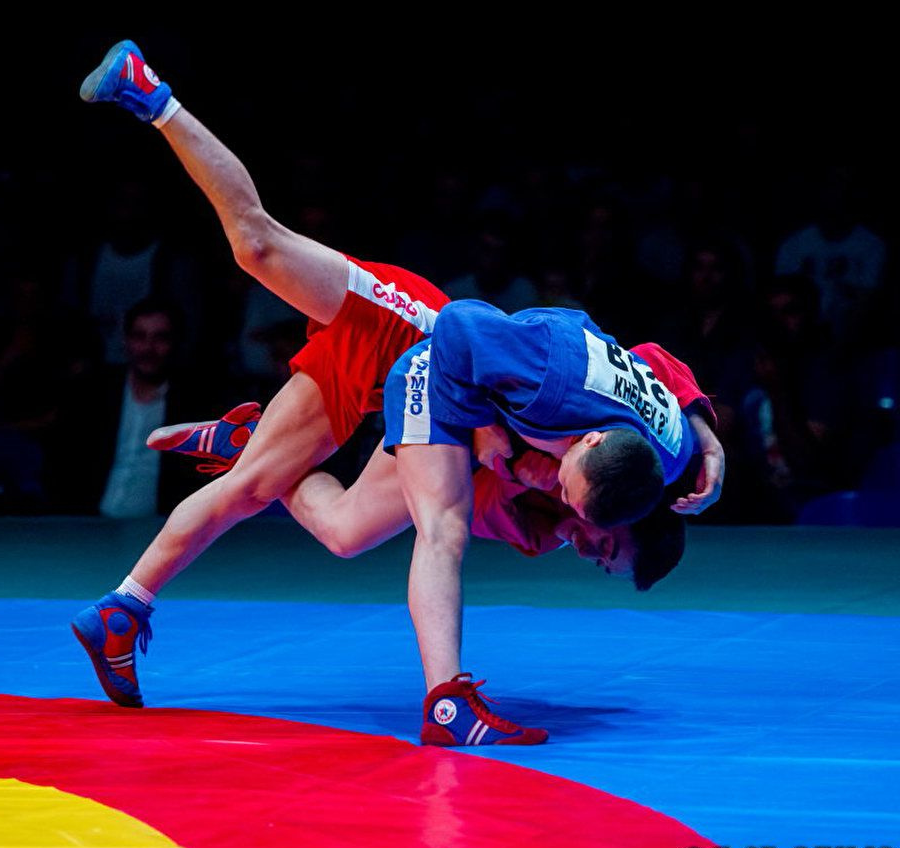
Sport Sambo is practiced by many civilians that want to do a martial art for the sport aspect. It is fun and exciting since it mixes throws, takedowns, pins and submissions. It is very close to Wrestling and Judo but with more leg locks, leg grab takedowns and no chokes. Practicioners wear a jacket called Kurtka, shorts and special shoes called Sambovki.
It is a nonstop action in Sport Sambo matches. Athletes (Sambists) try to score points with throws and pins or win by submission. The rules are set in place to keep athletes as safe as possible allowing them to showcase their skills. Today, we see many top MMA fighters, like Islam Makhachev, Khabib Nurmagomedov, Merab Dvalishvili and others coming from Combat Sambo which we will talk about next.
It’s a great way to learn how to grapple without getting punched and kicked. Sport Sambo is the perfect mixture of technique and athleticism.
Combat Sambo
Moving from Sport Sambo, we now step into the ring of Combat Sambo. This style packs a bigger punch – literally. We’ve seen it grow into a fierce combat sport that looks a lot like modern MMA.
It mixes strikes and grappling, making it a real test for fighters. Combat Sambo first hit the world stage in 2001 at the FIAS World Championships. Since then, it’s gained fans fast.
A big moment came in 2015 when women joined the fight at the Paris Grand Prix. Now, both men and women show off their skills in this tough sport.
Sport Sambo
Very close to judo, jiu-jitsu, kurash, and catch wrestling. No punches and kicks are allowed.
Combat Sambo
Created for real-life combat, this is the style we see most professional MMA fighters use.
Beach Sambo
Played on sand, this version adds an extra challenge that requires endurance and explosiveness.
Beach Sambo
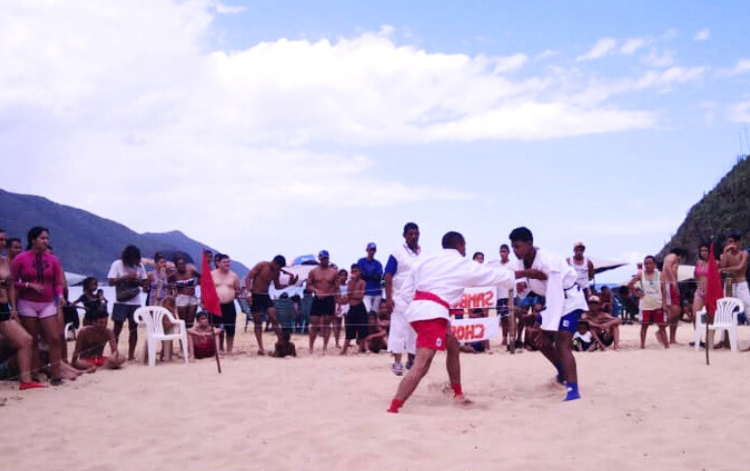
Beach Sambo is making waves in the world of martial arts. Beach Sambo has grown since it is unique and allows for those that can’t afford a gym membership. This is practiced fully on the beach, so it adds a extra set of challenges for athletes and it is exciting for fans.
In Beach Sambo, fighters can use a range of techniques, including throws and holds, much like the original sport. The difference is that it’s all done in an outdoor setting, where the sand changes the game. It’s fast-paced, fun to watch, and puts fighters’ adaptability to the test.
Beach Sambo pushes athletes to their limits. They must master endurance, balance and quick reflexes in a entire new environment.
Self Defense Sambo
Self Defense Sambo puts safety first. We focus on quick moves to stop armed attackers. Our training covers ways to block knives, guns, and other weapons. We learn to use an attacker’s force against them, just like in judo.
Self Defense Sambo is about turning danger into opportunity.
This style grew from real-world needs. It’s not just for soldiers – civilians use it too. We practice scenarios that could happen on the street. Next, let’s look at how Sambo has grown on the world stage.
It blends strikes, throws, and joint locks for a well-rounded defense system.
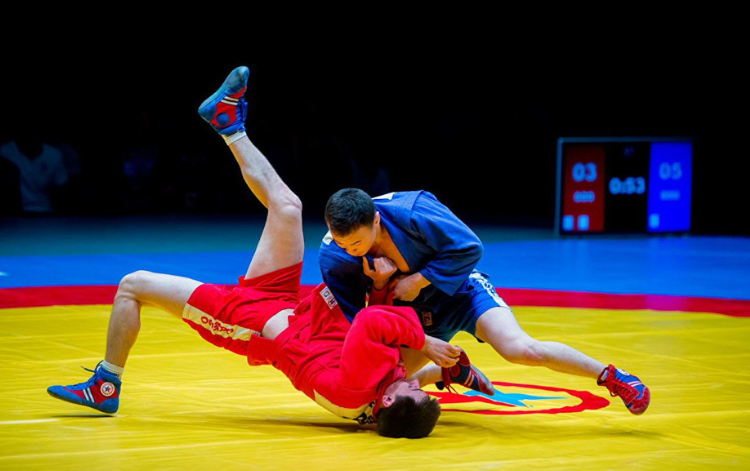
Key Developments in Sambo’s History
Sambo’s path from military training to a combat sport is full of twists and turns. We’ve seen it flourish from its beginnings in the early 1900s to global fame today. Want to know more about this exciting path? Keep reading!
Sambo’s Early 20th-Century Origins
We can trace Sambo’s roots to the early 1920s in the Soviet Red Army. This fighting style blended the best parts of many martial arts. Viktor Spiridonov and Vasili Oshchepkov played key roles in its creation.
They mixed moves from Judo, different Wrestling, and other combat sports. Their goal? To make a tough, all-around fighting system for soldiers.
Sadly, Sambo’s early days weren’t all smooth. In 1937, during Stalin’s purges, Oshchepkov was wrongly accused of spying. He died that same year. But his work lived on. On November 16, 1938, the USSR sports committee officially recognized Sambo as a sport.
This move helped Sambo grow beyond its military roots. It started to catch on with regular folks who wanted to learn self-defense.
Expansion After World World II
Post-World Warr II Sambo grew past its military beginnings. It slowly spread to different parts of Eastern Europe and the Soviet Union. More and more civilians began to practice and learn this one-of-a-kind fighting style.
Some big changes came into play when Sambo kept growing. In 1968, FILA (now known as United World Wrestling) accepted Sambo as a sport. The following year, FILA hosted its firs ever World Cup Sambo Championships.
This allowed Sambo to spread even further as it gained more practitioners from all over the world. As Sambo grew as a sport it also influenced self defense methods and other martial arts.
Formal Recognition and Standardization
Beyond military circles, Sambo grew, but it needed official recognition. This was seen in 1985when FIAS (Fédération Internationale de Sambo) was created. FIAS was able to set rules and officially organize Sambo.
With their help, Sambo became a real sport that people can compete throughout the world.
But they never stopped there, they wanted even more. In 2018 one of their dreams came true. The International Olympic Committee (IOC) gave Sambo temporary recognition. This was one of the biggest steps! It meant Sambo was one step closer to being an Olympic sport.
For the dedicated martial artist like us that have been training and teaching Sambo for years, new doors opened up. The biggest chance to show of our skills in the biggest stage opened up.
Soviet Red Army
Viktor Spiridonov and Vasili Oshchepkov played key roles in Sambo's creation.
USSR sports committee
In 1938 the USSR Sports Committee officially recognized Sambo as a sport.
United World Wrestling
FILA (now known as United World Wrestling) in 1968 accepted Sambo as a sport.
Sambo on the World Stage
Sambo has grown into a global sport. We’ve seen it featured in major events like the FIAS World SAMBO Championships.
FIAS World SAMBO Championships
Let’s dive deeper into the FIAS World Sambo Championships since we already know that Sambo grew from its military roots to a worldwide sport. The World Championship at the moment is the highest Sambo competition around. This is unless the Olympics committee make Sambo a set sport.
- FIAS World Sambo Championships began in 1973
- These events allow Sambo fighters from all over the world to compete
- Competitions include Beach Sambo, Combat Sambo and Sport Sambo
- There are different weight classes and divisions for men and women
- Matches for women last 4 minutes and men last 5 minutes
- Competitors try to score points by throws, pins or win by submission
- The World Championships help spread Sambo’s popularity globally
- Russian athletes often dominate these events
- Famous champions include Fedor Emelianenko and Khabib Nurmagomedov
- The event has grown to include over 80 countries
- The Combat Sambo Worlds is a great steppingstone for many mixed martial artists
- Many Combat Sambo champions now have careers in the UFC
- The championships have helped Sambo gain recognition as a unique martial art
- They’ve played a role in pushing for Olympic inclusion
- Recent years have seen more varied international participation
- The event now include beach Sambo categories
Inclusion in Multi-Sport Events
Sambo now has shown its prominence in the biggest stages for Sambo and MMA. This Russian martial arts is one of the few martial arts that have stood the test of time in all stages.
- World Games showcase: Sambo first appeared in the World Games in 1985. It returned to the event in 1993, proving its growing global appeal.
- Summer Universiade debut: The 27th Summer Universiade in 2013 featured Sambo as a demonstration sport. This event in Kazan, Russia, put Sambo on display for university athletes from around the globe.
- European Games inclusion: Sambo was part of the inaugural European Games in 2015. This event in Baku, Azerbaijan, gave Sambists a new platform to show their skills.
- Asian Indoor and Martial Arts Games: Since 2017, Sambo has been a regular fixture in these games. It’s now a key part of Asia’s martial arts scene.
- Pan American Games recognition: Sambo was added to the Pan American Games program in 2019. This was a smart move once more grew its reach across the Americas.
- Youth Olympic Games potential: There’s talk of including Sambo in future Youth Olympic Games. But as we know, that is very hard to do. If this was to happen it would expose more young athletes to the sport.
- Olympic aspirations: While not yet an Olympic sport, Sambo’s governing body is pushing for inclusion. The mixed martial arts community is watching this space closely.
Sambo’s growth throughout MMA, Pan American Games and World Championships has boosted its global profile. Let’s take a closer look at how Sambo has influenced areas beyond the military.
Sambo has changed a lot since it began in Russia. Some rules have shifted, new moves have popped up and more people are competing in it from other parts of the world. Keep reading!
Evolution of Sambo in International Participation
In recent years we have witnessed the evolution of Sambo beyond its Russian roots. More countries continue to add Sambo as a dominant martial art to their culture. This brings fresh new energy and talent to the sport. In 2022 at the Asian Sambo Championships New Zealand and Australia made their debut.
That is a big step that Sambo was able to reach the Pacific region.
Women’s Combat Sambo is also picking up steam at the world events. As well, at the Asian and Oceania Sambo championships in 2022 the first internation women’s Combat Sambo tournament took place.
This shows us the evolution of Sambo including various athletes. As Sambo grows worldwide, it faces new challenges in keeping its identity while being adapted to new cultures.
No let’s discover how Sambo has shaped other martial arts and popular culture.
Asian Championships
In 2022 through the Asian Sambo Championships, new doors and possibilities opened up.
Women Combat Sambo
Women Combat Sambo has broken through the system and made its mark in big ways.
Sambo Grows Worldwide
Sambo keeps growing since the 60s, with the first World Cup in 69 and U.S. Nationals in 75.
Sambo’s Influence Beyond the Military
Sambo has grown beyond the military circles giving so many others an opportunity to learn the art. This can be seen in local self Defense classes and movies like John Wick.
Self Defense Sambo for Civilians
Sambo from military to civilians has created a new generation of people that want to learn how to stay safe in the streets. May now use self defense Sambo in daily life. Mixing techniques from Sport Sambo and Combat Sambo with strikes, throws, and ground fighting techniques makes it great for real-world situations.
Practitioners like that not only teaches us moves, but also how to stay calm and to think fast when danger arises.
Since the spread of Sambo to civilians, it has changed how we view self defense in general. It is not only about standing your ground and fighting back, but also to be smart, be prepared and avoid a fight when possible. Regular classes include lessons on awareness and how to avoid fights.
This broader view helps people feel safer in their everyday lives. Next, let’s look at how Sambo has shaped other martial arts.
Sambo’s Influence on Other Martial Arts
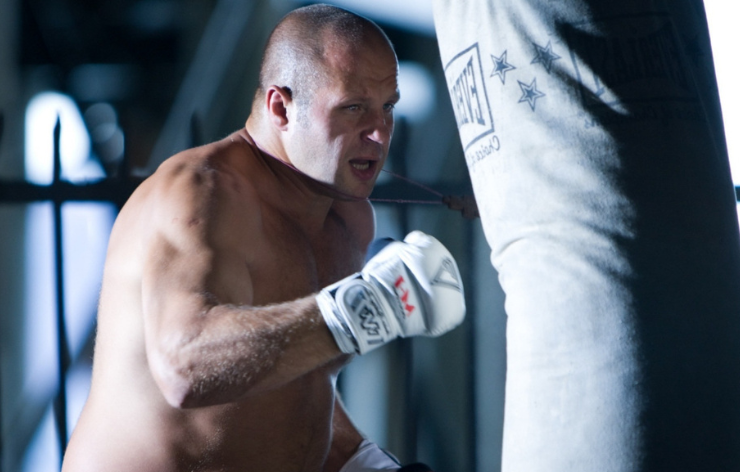
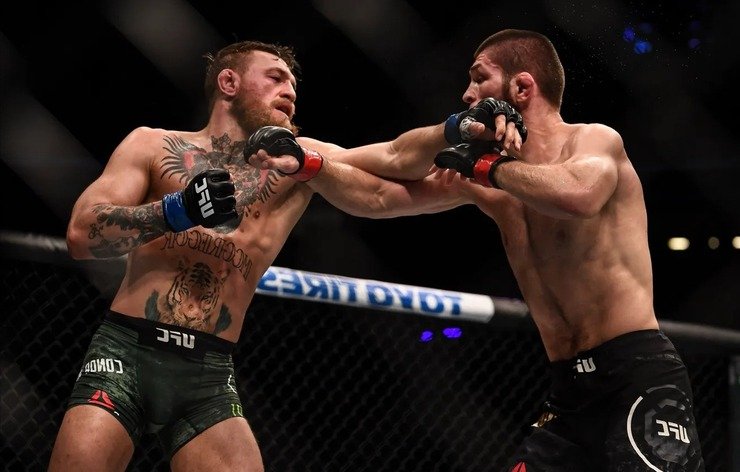
Just like Sambo was influenced by other fighting styles, it now makes a impact in many other martial arts. Since it combines takedowns, submissions and striking techniques it has caught the attention of martial artists abroad. We now see high level MMA fighters like Islam Makhachev use Sambo moves with high success rates.
This has shown the world how effective Sambo techniques are against other fighting style like Brazilian Jiu Jitsu, Muay Thai and Judo.
Sambo’s leg lock attacks and top control wrestling have been adopted by Brazilian Jiu Jitsu and MMA practitioners. Its stand-up fighting techniques are also used by other MMA fighters. Even law enforcement and the military have modified some of their Sambo techniques.
As Sambo grows, we expect to see more of its methods pop up in gyms and dojos across the globe.
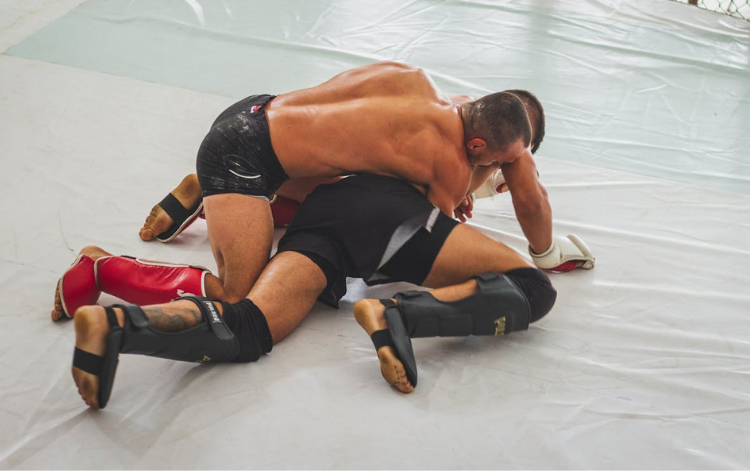
Cultural Impact and Popular Media
Beyond the mat, Sambo has left its mark on popular culture. We’ve seen it featured in movies, TV shows, and video games. The 2023 film “Legends of Sambo” shines a light on the sport’s origins. Also, movies like Joh Wick and Undefeated have utilized many explosive and exciting Sambo moves.
It tells the story of how this martial art came to be. In video games like Street fighter, characters like Zangief use Sambo moves to defeat his opponents. These representations help spread awareness of the sport to new audiences across the globe.
Sambo’s impact goes beyond entertainment. It has shaped how people view Russian martial arts. The term “Sambo” is now used worldwide, despite some language issues in English-speaking countries.
We’ve noticed more people getting curious about Sambo after seeing it in media. This interest helps grow the sport and keeps its traditions alive.
Sambo in Movies
John Wick uses Sambo techniques, blending throws and grappling to take down enemies.
Sambo Cultural Impact
It has influenced martial arts culture abroad Russia, shaping modern combat training.
Sambo in Video Games
Sambo techniques can be seen in popular video games like the Street fighter with Zangief.
Current Challenges and Future Projections
Sambo faces hurdles on its path to Olympic recognition, but its future looks bright – read on to learn more about this dynamic martial art’s journey from military training to global sport.
Controversies and Challenges
We’ve seen Sambo face its share of bumps in the road. In 1993, FIAS split into “East” and “West” groups, causing confusion in the sport’s leadership. This split made it hard to keep rules and standards the same across the board.
We also saw FILA pull its support from FIAS “West” in 2008, which shook up how Sambo was run worldwide.
Politics have played a big role in Sambo’s troubles too. Some folks link the sport closely with Russia, which can be tricky in today’s world. This tie has made it tough for Sambo to grow in some places.
We’ve also noticed that getting more women into the sport has been a challenge. But we’re still working to have a unified Sambo that can be a martial arts practiced by everyone no matter where they’re from or who they are.
Sambo Potentially Included in The Olympic Games
Sambo’s path to the Olympics has not been a easy one. It has taken turns and ups and downs along the way. On November 30, 2018, the International Olympic Committee (IOC) gave Sambo temporary recognition.
This was a huge step forward for us in the martial arts world. It opened doors for Sambo to possibly join the Olympic family in the future.
Yet, from here on out it will still be difficult. Sambo must keep proving that it is worth to be on the biggest stage. It must demonstrate that it has a wide audience and follows strict anti-doping rules. There are other martial arts trying to get accepted by the Olympic committee at the same time.
Still, we keep charging forward and hopeful. Sambo’s one-of-a-kind mix of striking and grappling could be a big hit with Olympic fans. Now, let’s look at some challenges happening right now that Sambo is facing.
Future Trends in Training and Competition
We’re seeing great changes in Sambo competition and training. Technology is making its way into local training centers. Virtual reality systems let fighters drill moves without risk of injury, but this should never replace real training.
Wearable sensors track athletes’ performances and allow coaches to take a deeper look at their physical conditioning. These tools are changing and helping athletes prepare for big events.
Rules for competition keep evolving as well. There’s a push to make Sambo more TV-friendly. Shorter rounds and clearer scoring may draw in new fans. We might see more women’s events, like the 2022 Asian and Oceania Combat Sambo Championships.
As the sport grows, expect to see fresh faces and styles mixing it up on the mat.
Evolution of Sambo Conclusion
Evolutions of Sambo and its journey from their military background to a combat sport shocks us. It grew from survival training for war to a refined martial art used in competitions globally. Now anyone with access to Sambo can train in it and compete. The sport keeps evolving, with new techniques and styles being added to it.
We can’t wait to see what’s next for this dynamic martial art.
Are You Ready to Begin on Your Sambo Martial Arts Path?

If you have been searching for Combat Sambo Near Me and have not found one you should join our online academy!
Here’s why…
Russiansambo.com was created by Lucas Morley and Valdislav Koulikov.
Between both, Vlad and Lucas have over 30 years’ experience with Combat Sambo, Judo and Brazilian Jiu Jitsu. They have both travelled all around the world learning the best of Martial Arts and perfecting their Sambo Wrestling.
Vlad learned his Sambo directly from the source at Sambo-70 in Russia. He is also a Black Belt in Brazilian Jiu Jitsu and a 2nd degree Black Belt in Judo. Lucas is a 3rd degree Black Belt Judo, Gracie Jiu Jitsu 2nd degree Black Belt under Rickson Gracie’s student Luiz Palhares, and a Black Belt coach in Combat Sambo under Vladislav Koulikov where the belt system was born. Coach Lucas is also a certified Boxing coach, teaching Boxing for the last 8 years.
Contact Us Now for Seminars, Privates or Long Distance Training!
Were available for commessions and collaborations and to hear from you
- [email protected]
- 772-626-6500